
How outdoor learning actually works — without the jargon.
Grounded in Reggio Emilia and Forest School traditions, every Little Nomads morning is calm, intentional, and deeply respectful of how young children actually grow — blending real science, kindness, and unhurried discovery in Vancouver’s wild spaces.
Parents are the first teacher. Educators are the second. The natural world is the third.
“Time in nature is not leisure time; it’s an essential investment in our children’s health.”— Richard Louv, Last Child in the Woods
Many parents hear the phrase “Reggio Emilia” and wonder what it means in everyday life. Born in northern Italy after World War II, it rests on one simple, practical belief: young children are already strong, capable, and full of genuine ideas.
Instead of sitting twenty toddlers at a table to glue the same paper craft, we bring small 1:5 groups straight into Pacific Spirit’s cedars, Kitsilano’s low-tide pools, and Vancouver’s gardens — where real textures, weather, living creatures, and seasons invite questions no plastic toy could ever spark.
Parents & Family
You know your child best. Every morning starts with an unhurried human check-in — late bedtime, new baby at home, or big curiosity — so we meet them right where they are.
Attentive Educators
Our guides observe closely, step back when children are deep in focus, introduce real vocabulary at teachable moments, and document discoveries for your family journal.
The Living Coast & Forest
Mossy nurse logs, tidal ranges, garden soil, and rain puddles offer endless open-ended challenges that naturally grow balance, problem-solving, and calm self-regulation.
Every creature has a role — and so do we.
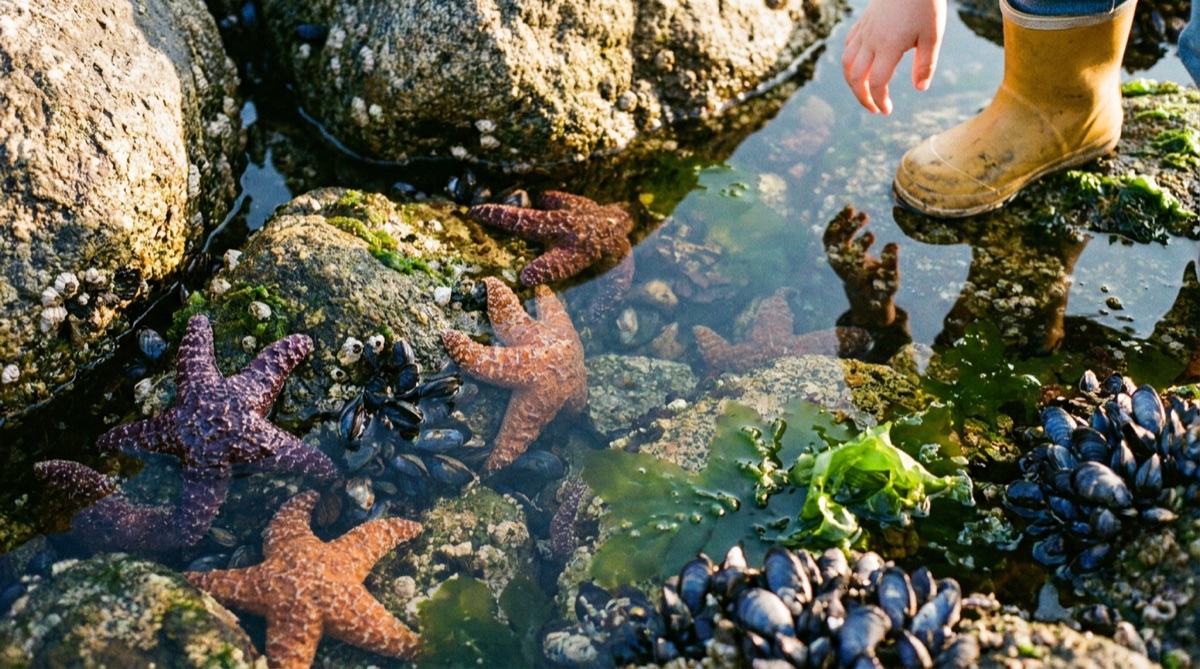
At Kitsilano Secret Beach, children crouch beside low-tide pools to observe purple ochre sea stars and learn how clusters of blue mussels act as tiny “ecosystem engineers” — filtering coastal water and sheltering smaller shoreline life until the tide returns.
Seeing firsthand how everything in an ecosystem depends on gentle balance teaches far more than marine biology. Children discover that respecting nature and respecting ourselves go hand in hand — practising patience, soft hands, and genuine kindness toward both wildlife and friends.
Rather than rushing to a new park every day, we stay at each forest, beach, or garden for four or more weeks — watching tides shift, garlic shoots sprout, and seasons turn so children build a true sense of belonging.
We plan for an experience, not a rigid outcome.
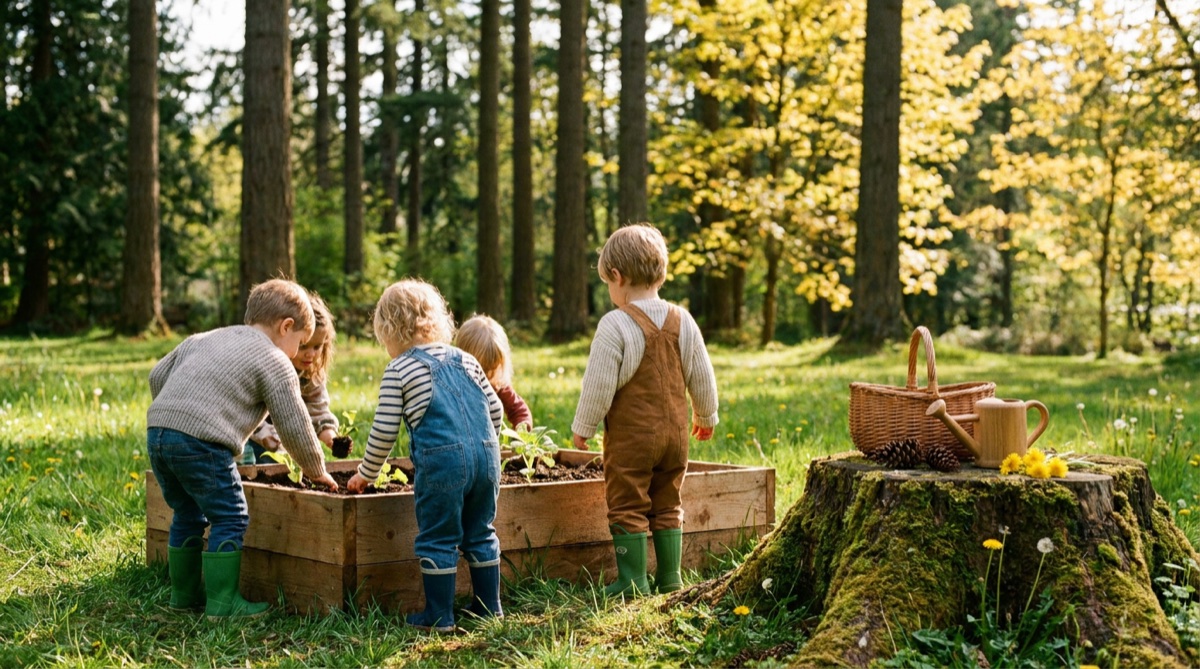
Before each session, educators prepare rich provocations — magnifying lenses, field guides, watering cans, acoustic guitar songs, or clay — without forcing a pre-decided result. During play, we listen for the questions children genuinely care about.
At the end of every session, we gather to share our “wonders.” If a four-year-old asks how mussels know when the ocean is coming back, or whether a fallen cedar is a beetle hotel, those exact questions shape next week’s materials and stories — and land inside your private family journal so you stay connected to their day.
Inside a Little Nomads Session
-
01
Warm Drop-Off
A personal check-in with parents — late bedtime, stuffy nose, or big excitement, every detail helps us care well.
-
02
Welcome Circle
Songs, stories, and listening to the children’s own ideas for the day — they often imagine even better adventures than we do.
-
03
Wild Exploration
Unhurried child-led discovery along trails, tidepools, and garden beds while educators follow teachable moments.
-
04
Warm Wash & Snack
We carry warm water and soap for outdoor handwashing, followed by social snack time to refuel and connect.
-
05
“Wonders” Circle
We gather to reflect on what sparked joy and what “wonders” came up — directly shaping next week’s materials.
Freedom outdoors, anchored in steady care.
Children grow real resilience when they are trusted to climb mossy logs and weather a West Coast drizzle — backed by attentive adults who never compromise on safety.
Calm 1 : 5 Educator-to-Child Ratio
Small groups mean every child is truly known, heard, and closely supported along trails and shorelines — never lost in a loud crowd.
First-Aid Trained, Every Session
Every guide carries a full outdoor first-aid kit, emergency contacts, allergy/medical protocols, and warm water & soap for proper outdoor handwashing.
Built for Real Vancouver Weather
With waterproof rain pants, jacket, warm fleece/wool layers, and tall boots, rainy forest mornings are often the children’s favourite sessions of all. High-wind warnings automatically shift to sheltered sites.
Seamless After School Walking Pickup
For Lord Selkirk and Tyee Elementary families, our guides walk children straight from dismissal to Trout Lake, Clark Park, or Brewers Park until 5:00 PM.
Ready to let them roam?
Estimate your schedule and tuition in thirty seconds, then reserve your child’s spot or join our priority list.